
|
|---|
The Department welcomes 3 new faculty members
The department is extremely happy to report that after a vigorous recruiting effort, three top young scientists are joining our faculty. Dr. Lindley Winslow from MIT has accepted our offer to come to UCLA, where she will begin a dedicated research program in neutrino physics, within the area of Experimental Nuclear and Elementary Particles physics.
Dr. Wesley Campbell, an expert in the physics of cold molecular ion traps from the University of Maryland, will be joining our burgeoning program in Atomic, Molecular and Optical physics. Both Dr. Winslow and Dr. Campbell will arrive in time for the start of the 2012-13 academic year. In addition,
Dr. Ni Ni received her PhD from Iowa State University, then did postdoctoral work at Princeton University and Los Alamos National Laboratory. Prof. Ni has agreed to come to help build new efforts in Experimental Condensed Matter physics, with particular emphasis on the rapidly growing field of quantum materials. She is currently a Curie Fellow at LANL — the first person to receive this fellowship — and will be actively joining us in July, 2013. All three are scholars of truly impressive accomplishments and future prospects, and their arrival gives concrete evidence that UCLA Physics and Astronomy continues to attract the finest faculty talent available. We are looking forward to having these new colleagues initiate their work here, bringing new research thrusts and perspectives to our department.
Physicists celebrate Higgs boson "triumph"
Physicists are celebrating the almost certain detection of the Higgs subatomic particle (the so-called God particle) that 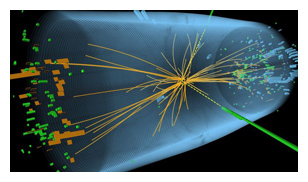 exists for a fraction of a second. Our own Prof. Robert Cousins, a member of one of the two research teams that has been chasing the Higgs boson at CERN commented that it also points the way toward a new path of scientific inquiry into the mass-generating mechanism that was never before possible. "I compare it to turning the corner and walking around a building -- there's a whole new set of things you can look at," he said. "It is a beginning, not an end."
Website Robert Cousins
Astronomer wins Gruber Cosmology Prize
Prof. Edward (Ned) Wright was named a recipient of the 2012 Gruber Cosmology  Prize along with other scientists who made major contributions to the Wilkinson Microwave Anisotropy. Wright and his colleagues will be honored Aug. 21 for their observations and analyses that have provided rigorous measurements of the age, content, geometry and origin of the universe. Among the WMAP unprecedented findings are that the universe is within 1 percent of 13.75 billion years old, and consists of 22.7 percent dark matter, 72.8 percent dark energy, and only 4.6 percent ordinary matter.
Website: Edward (Ned) Wright
Website Robert Cousins
Astronomer wins Gruber Cosmology Prize
Prize along with other scientists who made major contributions to the Wilkinson Microwave Anisotropy. Wright and his colleagues will be honored Aug. 21 for their observations and analyses that have provided rigorous measurements of the age, content, geometry and origin of the universe. Among the WMAP unprecedented findings are that the universe is within 1 percent of 13.75 billion years old, and consists of 22.7 percent dark matter, 72.8 percent dark energy, and only 4.6 percent ordinary matter.Website: Edward (Ned) Wright

Andrea Ghez, a professor of physics and astronomy, has been elected to the American Philosophical Society
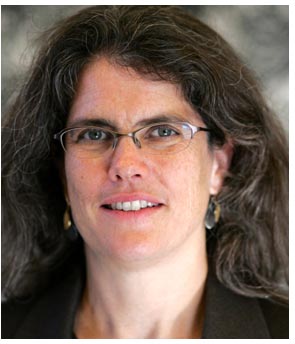 UCLA astronomer Prof. Andrea Ghez has been elected to the American Philosophical Society, which recognizes extraordinary achievements in science, letters and the arts. It was founded in 1743 by Benjamin Franklin, along with co-founder John Bartram, is an
eminent scholarly organization of international reputation that promotes useful knowledge in the sciences and humanities through excellence in scholarly research, professional meetings, publications, library resources, and community outreach. Illustrious names have continually been added to the membership roster, reflecting the society's scope. Charles Darwin, Robert Frost, Louis Pasteur, Elizabeth Cabot Agassiz, John James Audubon, Linus Pauling, Margaret Mead, Maria Mitchell, and Thomas Edison became members of the Society. The Society continues to attract names of high renown today.
Election to the American Philosophical Society honors extraordinary accomplishments. The APS is an honorary society that elects new members to their ranks each year in April. Nominations for membership can only be made by Resident members of the Society. For Prof. Ghez, this honor follows a similar rare achievement in being elected to the National Academy of Sciences.
READ MORE:
UCLA's Andrea Ghez, Terence Tao elected to American Philosophical Society
About the American Philosophical Society
Website: Andrea Ghez
Andrea Ghez is the first woman to be awarded the Crafoord Prize
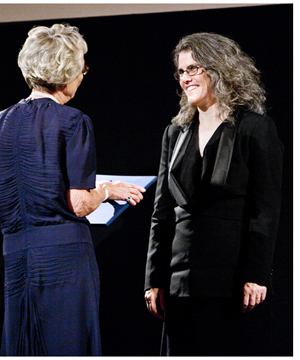 The Royal Swedish Academy of Sciences has awarded the Crafoord Prize in Astronomy 2012 to Reinhard Genzel,Max Planck Institute for Extraterrestrial Physics, Garching, Germany and Andrea Ghez, University of California, Los Angeles, USA,
"for their observations of the stars orbiting the galactic centre, indicating the presence of a supermassive black hole".
For more than 15 years UCLA astronomer Andrea Ghez poured her heart –and every research moment she could find -- into exploring the existence of a supermassive black hole at the center of the Milky Way. When she began, no one was certain that such a thing existed.
Ghez's work, along with fellow recipient and German astronomer Reinhard Genzel's, is the best evidence to date that supermassive black holes exist, and indicates that they most likely can be found at the heart of all galaxies.
This extraordinary research was recognized with a Crafoord Prize in Astronomy from the Royal Swedish Academy of Scientists-- a prize as prestigious as the Nobel among astronomers. Of the four Crafoord Prize winners this year, two hail from UCLA; also honored was Australian-American mathematics professor Terence Tao.
UCLA professor David Jewitt wins prestigious Kavli and
Shaw prizes in same week
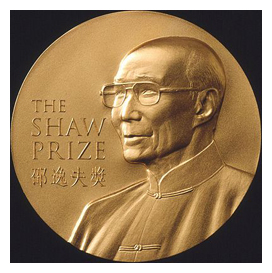
Prof. David Jewitt of the UCLA Departments of Physics and Astronomy, and Earth and Space
Sciences, has been awarded the Shaw Prize in astronomy and, remarkably, in the same week, won the 2012 Kavli Prize in astrophysics for his role in the 1993 discovery of the Kuiper Belt beyond Neptune. That the Shaw and Kavli prize committees independently made the same choice in the same week is "pretty excellent", stated Jewitt.
The Shaw prize, widely regarded as the "Nobel of the East", is named after Sir Run Run Shaw, a leader in the Hong Kong media industry and a long-time philanthropist. The prize is for recent achievements in the fields of astronomy, life science and medicine, and mathematical sciences; it is not awarded posthumously. The winners receive a medal and a certificate. In addition, the winner receives a sum of money, which is worth US$1 million as of 2008.
The Ka vli Prize in Astrophysics is awarded for outstanding achievement in advancing our knowledge and understanding of the origin, evolution, and properties of the universe, including the fields of cosmology, astrophysics, astronomy, planetary science, solar physics, space science, astrobiology, astronomical and astrophysical instrumentation, and particle astrophysics. The Kavli Prize consists of USD 1,000,000 in each of the scientific fields. In addition to the prize money the laureates receive a scroll and a gold medal.
Prof. Jewitt directs UCLA's Institute for Planets and Exoplanets. His research focuses on the exploration of the small bodies of the solar system, which provide clues to the origin and evolution of planets.
Eric Hudson of UCLA Receives Prestigious Cottrell Scholar Award for Science Research and Teaching
Research Corporation for Science Advancement (RCSA), America's oldest foundation devoted exclusively to science, announced today that it is honoring Eric Hudson, assistant professor of physics and 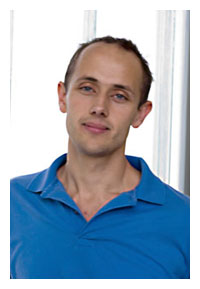 astronomy, UCLA, with a prestigious academic award, the Cottrell Scholar Award. The Award, one of 11 issued nationally this year, recognizes leaders in integrating science teaching and research at America's top research universities. Each recipient receives a $75,000 grant and admission to an exclusive community of scholars, the Cottrell Scholars Collaborative."RCSA has named Hudson a 2012 Cottrell Scholar, based on his innovative research as well as his passion for teaching," said James M. Gentile, RCSA president and CEO. As an early-career teacher, Hudson was responsible for beginning UCLA's first course on atomic, molecular and optical physics (AMO). He has also won an undergraduate teaching award for his work. Hudson received the Cottrell Scholar Award (CSA) based on his peer-reviewed proposal that included both research and teaching projects.
UCLA Hudson Group AMO Physics research
Eric Hudson of UCLA Receives Prestigious Cottrell Scholar Award for Science Research and Teaching
Research Advancement for Science Advancement Cottrell Scholar Awards
Astronomers discover Houdini-like vanishing act in space
 UCLA astronomer Benjamin Zuckerman and colleagues report a baffling discovery never seen before: An extraordinary amount of dust around a nearby star has mysteriously disappeared.
"It's like the classic magician's trick — now you see it, now you don't," said Carl Melis, a postdoctoral scholar at UC San Diego and lead author of the research. "Only in this case, we're talking about enough dust to fill an inner solar system, and it really is gone!" "It's as if the rings around Saturn had disappeared," said co-author Benjamin Zuckerman.
"This is even more shocking because the dusty disc of rocky debris was bigger and much more massive than Saturn's rings. The disc around this star, if it were in our solar system, would have extended from the sun halfway out to Earth, near the orbit of Mercury." The research on this cosmic vanishing act, which occurred around a star some 450 light years from Earth, in the direction of the constellation Centaurus, appears July 5 in the journal Nature.
Quantum "Graviton" Particles May Resemble Ordinary Particles of Force [Preview]
 The May issue of Scientific American features an article by UCLA professor of physics and astronomy Zvi Bern and colleagues about the ways in which new discoveries of how ordinary particles behave under extreme conditions at the Large Hadron Collider have helped scientists in their search for exotic particles and forces and have breathed new life into the search for a unified theory.
READ More:
The May issue of Scientific American features an article by UCLA professor of physics and astronomy Zvi Bern and colleagues about the ways in which new discoveries of how ordinary particles behave under extreme conditions at the Large Hadron Collider have helped scientists in their search for exotic particles and forces and have breathed new life into the search for a unified theory.
READ More:Scientific American
Zvi Bern, UCLA Physics & Astronomy
'Time machine' will study the early universe
 UCLA's Ian McLean, colleagues build most advanced instrument of its kind
A new scientific instrument, a "time machine" of sorts, built by UCLA astronomers and colleagues, will allow scientists to study the earliest galaxies in the universe. Keck's MOSFIRE achieved First Light on on April 4, 2012. IanMcLean reported that his team had a successful two-night run despite the fact that the weather did not cooperate and they battled clouds on both nights. Most of the activity was focused on engineering tasks.
New technique lets scientists peer within nanoparticles, see atomic structure in 3-D
UCLA researchers are now able to peer deep within the world's tiniest structures to create three-dimensional images of individual atoms and their positions. Their research, published March 22 in the journal Nature, presents a new method for directly measuring the atomic structure of nanomaterials.
 "This is the first experiment where we can directly see local structures in three dimensions at atomic-scale resolution — that's never been done before," said Jianwei (John) Miao, a professor of physics and astronomy and a researcher with the California NanoSystems Institute (CNSI) at UCLA.
Read More:
Peering Into World'sTiniest Structures,United Press International
Science Science Shots: Crystal Clear Nano-Gold
Nature
Website: Jianwei Miao
.
A half-billion stars and galaxies from NASA's WISE mission revealed — many for first time
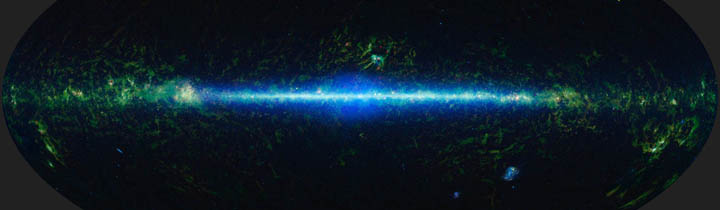
"Today WISE delivers the fruit of 14 years of effort to the astronomical community," said Edward L. (Ned) Wright, a UCLA professor of physics and astronomy and the mission's principal investigator, who began working on the mission in 1998.
Read more: UCLA Newsroom
Astronomy team that includes UCLA finance professor discovers nearby dwarf galaxy
 A team led by UCLA research astronomer Michael Rich has used a unique telescope to discover a previously unknown companion to the nearby galaxy NGC 4449, which is some 12.5 million light years from Earth. The newly discovered dwarf galaxy had escaped even the prying eyes of the Hubble Space Telescope.
The research is published Feb. 9 in the journal Nature.
UCLA physicists report nanotechnology feat with proteins
 UCLA physicists have made nanomechanical measurements of unprecedented resolution on protein molecules.
The new measurements, by UCLA physics professor Giovanni Zocchi and former UCLA physics graduate student Yong Wang, are approximately 100 times higher in resolution than previous mechanical measurements, a nanotechnology feat which reveals an isolated protein molecule, surprisingly, is neither a solid nor a liquid.
"Proteins are the molecular machines of life, the molecules we are made of," Zocchi said. "We have found that sometimes they behave as a solid and sometimes as a liquid.
Read more: UCLA Newsroom
Website: Giovanni Zocchi
E V E N T S |
|---|
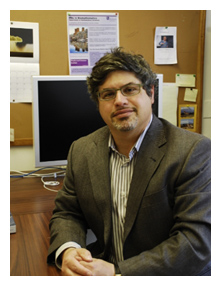
UCLA creates new Center for Biological Physics
.jpg)
UCLA has launched the new Center for Biological Physics within the UCLA Department of Physics and Astronomy, which will approach questions about living systems in a new light, based on the study of physics.
"We do not necessarily intend to answer questions posed by our colleagues in the life sciences differently, but rather to ask different questions," said the center's new director, Alex Levine, a professor of physics and astronomy and of chemistry and biochemistry. "We founded this center to foster an environment where those new questions may be framed."
Visit the Physics & Astronomy website for upcoming events
Act as if what you do makes a difference. It does.
William James
The principal commitment of the UCLA Department of Physics and Astronomy is to train the scientific leaders of the next generation and to expand the limits of our knowledge of the nature of the universe in which we live. Your generosity plays a vital role in our ability to fulfill that commitment. Your gift to the UCLA Department of Physics and Astronomy allows us to enrich and enhance our educational program and to create new opportunities for students, faculty and all who benefit from the pursuit of knowledge at the frontiers of human understanding.
Thank you for your continued support of the Physics & Astronomy Department.
Giving to UCLA
CONTACTS
The Department of Physics & Astronomy Website
Assistant to the Chair
Email: chair@physics.ucla.edu
James Rosenzweig, Chair
UCLA Department of Physics and Astronomy
Box 951547
Los Angeles, CA 90095-1547
(310)825-3440 (310)206-0864 Fax
Please e-mail us if you do not wish to receive this e-newsletter we will remove you from our list. In subject line please type: remove from list